Mites vs lice on chickens: how to tell the difference
External parasites are one of the most common health problems in backyard and small-flock poultry. Two of the main culprits are mites and lice, and although owners often use the terms interchangeably, they are not the same. They behave differently, live in different places, spread in different ways, and require slightly different approaches to diagnosis and control.
Knowing whether your birds have mites or lice on chickens matters because the signs can overlap at first: itching, feather damage, reduced laying, and poor condition. A close look at the bird, the coop, and the timing of symptoms usually reveals the difference.
Why it matters to identify mites and lice correctly
A chicken with a heavy external parasite burden can decline surprisingly fast. Infestations can cause:
- irritation and constant preening
- broken or missing feathers
- pale combs from blood loss in severe cases
- weight loss or poor growth
- lower egg production
- stress and poor sleep
- secondary skin damage
- reduced winter hardiness and general condition
Some parasites spend most of their time on the bird, while others hide in the coop and feed at night. That difference affects both treatment and prevention. If you only treat the chicken when the real problem is living in cracks and crevices of the coop, the infestation often comes right back.
The key difference between mites and lice on chickens
At the simplest level:
- Chicken lice live on the bird full-time and feed mainly on feathers, skin debris, and scales.
- Many important chicken mites, especially red mites, spend much of their time off the bird, hiding in the coop and coming out to feed, usually at night. Some mites, such as northern fowl mites, remain on the bird more consistently and feed on blood.
This distinction is central to telling them apart.
What chicken lice are
Chicken lice are small, wingless insects. They are species-specific parasites of poultry and do not behave like human head lice. They are usually pale yellow, straw-colored, or tan, and they move fairly quickly through the feathers.
Unlike many mites, most chicken lice do not survive well away from the host. They stay on the chicken, where they feed on:
- feather material
- skin flakes
- debris
- occasionally blood from irritated skin, depending on species and skin damage
Lice lay eggs, often called nits, attached to feather shafts, especially around the vent, under the wings, and along fluffy feathers.
What chicken mites are
“Mites” is a broader category. Several different mites can affect chickens, and they do not all behave the same way. The three most relevant types to backyard poultry are:
Red mites
Red mites, also called roost mites, are among the most troublesome coop parasites. They hide in:
- cracks in roosts
- nest box seams
- wall joints
- under ledges
- around hardware and perch ends
They come out at night to feed on blood. After feeding, they may appear red or dark from the blood meal. When unfed, they can look grayish or pale.
Northern fowl mites
Northern fowl mites are tiny blood-feeding parasites that spend more time on the chicken, especially around the vent area. They can create dark, dirty-looking clusters of mites and debris at the base of feathers.
Scaly leg mites
Scaly leg mites burrow under the scales on a chicken’s legs and feet. They do not cause the typical feather and skin signs seen with body mites or lice, but they are still part of the differential diagnosis when a bird is uncomfortable or in poor condition.
Mites vs lice on chickens: the most reliable signs
To tell the difference, focus on where you find them, when you find them, what they look like, and what damage they cause.
Where lice are usually found
Lice are usually found directly on the bird. Common areas include:
- around the vent
- under the wings
- along the breast
- on fluffy feathers below the abdomen
- around feather shafts where eggs are attached
If you part the feathers in daylight and inspect carefully, you can often see lice moving on the skin or along the feather bases.
Where mites are usually found
This depends on the type of mite.
Red mites
Red mites are often harder to find on the bird during the day because they leave after feeding. You are more likely to find them:
- in the coop
- on perch ends
- in cracks near roosts
- beneath nest box lips
- in crevices and joints
- in clusters hidden in rough wood
Northern fowl mites
These are more likely to be found on the bird, particularly:
- near the vent
- around the tail base
- in dense feather areas where debris accumulates
Scaly leg mites
These are found under leg scales, causing lifting, crusting, and a roughened appearance.
What lice look like on chickens
Chicken lice are usually:
- larger than mites
- elongated rather than round
- pale yellow, straw-colored, or light brown
- easier to see with the naked eye than many mites
Their eggs look like tiny white clusters glued to feather shafts. These egg masses are a strong clue for lice.
What mites look like on chickens
Mites are typically:
- smaller than lice
- more dot-like in appearance
- gray, black, red, or translucent depending on species and whether they have fed
- harder to see individually without close inspection
Red mites may appear as tiny moving specks in the coop. After a blood meal they can look dark red. Northern fowl mites can produce a pepper-like dirty buildup around the vent.
Daytime vs nighttime behavior: one of the biggest clues
If you suspect mites vs lice on chickens, timing can be highly revealing.
Lice are visible in daytime inspections
Because lice live on the bird all the time, daytime handling and feather-parting often reveal them clearly.
Red mites are often easiest to detect at night
A bird may seem irritated, pale, or restless, yet you find little on it during the day. That pattern strongly suggests red mites. If you inspect the coop after dark with a flashlight, especially around roosts and perch joints, you may see mites crawling to feed.
This nighttime behavior is one of the classic differences between red mites and lice on chickens.
How the symptoms differ
Both parasites can cause irritation, but there are important patterns.
Common signs of lice infestation
A chicken with lice may show:
- feather chewing or over-preening
- broken, frayed, or ragged feathers
- visible nits on feather shafts
- mild to moderate irritation
- reduced thriftiness in heavy infestations
- poor feather condition, especially around vent and abdomen
Lice often cause more obvious feather damage than severe anemia, unless the infestation is extreme or skin trauma is present.
Common signs of mite infestation
The signs vary by mite type.
Red mite signs
Red mite infestations often cause:
- reluctance to go into the coop at night
- restlessness on the roost
- pale combs and wattles
- anemia from repeated blood feeding
- drop in egg production
- weakness in young or vulnerable birds
- birds choosing unusual sleeping places
Because red mites feed at night, the coop may feel like the center of the problem rather than the bird alone.
Northern fowl mite signs
These mites can cause:
- intense irritation around the vent
- dark crusty debris at feather bases
- dirty-looking vent feathers
- decreased laying
- blood loss in heavy infestations
- scabby or inflamed skin
Scaly leg mite signs
These mites cause:
- raised or thickened leg scales
- crusting on shanks and feet
- discomfort when walking
- progressive deformity if ignored
How to inspect chickens for mites or lice
A systematic exam is the best way to distinguish them.
Step 1: Restrain the bird calmly
Inspect in good daylight or with a bright headlamp. Hold the bird securely but gently to avoid stress and feather breakage.
Step 2: Part the feathers in key areas
Check:
- around the vent
- under the wings
- along the abdomen
- near the tail base
- on the breast
- around the neck in heavily feathered birds
Look for movement on the skin, feather shaft eggs, debris, and skin irritation.
Step 3: Examine the feather shafts
If you see white or pale clumps firmly attached to feather shafts, especially in fluffy vent feathers, lice eggs are likely.
Step 4: Look for dark debris near the vent
A gray-black, peppery accumulation near the vent may suggest northern fowl mites, especially when combined with visible tiny moving dots.
Step 5: Inspect the legs
If the problem is mainly thickened scales and crusted shanks, consider scaly leg mites rather than body lice.
Step 6: Check the coop, especially at night
For suspected red mites, inspect:
- underside and ends of roosts
- perch brackets
- nest box corners
- wood cracks
- screw holes and joints
Wipe suspicious surfaces with a white tissue or paper towel. Crushed blood-fed mites may leave reddish streaks.
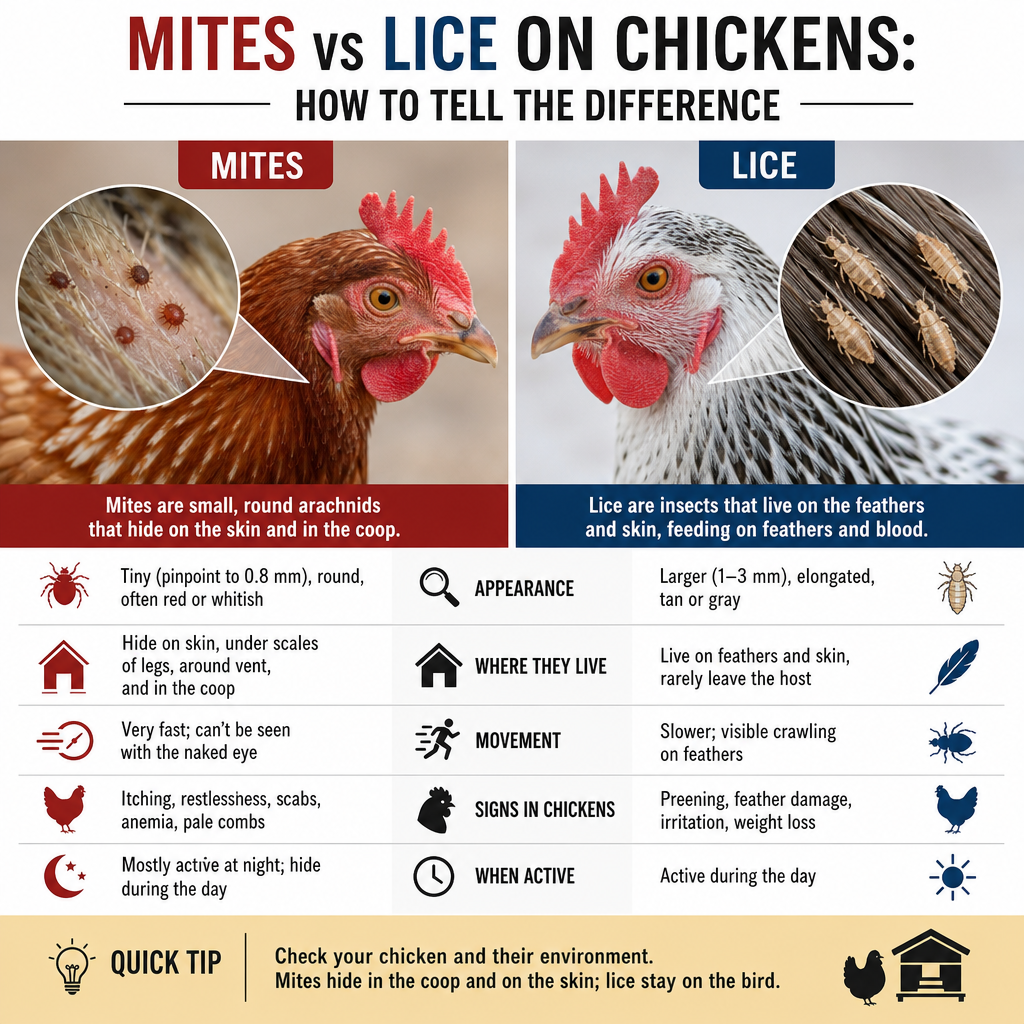
A quick comparison table: mites vs lice on chickens
| Feature | Lice | Mites |
|---|---|---|
| Main location | On the bird | Often in coop or on bird depending on species |
| Feeding | Feathers, skin debris, scales | Many feed on blood |
| Visibility | Often easier to see in daytime | May be hard to find, especially red mites by day |
| Eggs | Glued to feather shafts | Usually not noticed attached like lice nits |
| Size and shape | Larger, elongated, straw-colored | Smaller, dot-like, gray/red/dark |
| Coop involvement | Less important for full-time survival | Critical for red mite infestations |
| Typical damage | Feather wear, irritation | Irritation, anemia, poor sleep, drop in laying |
Can chickens have both mites and lice?
Yes. Mixed infestations can occur, especially in flocks with crowded conditions, poor biosecurity, infrequent health checks, or wild bird exposure. A bird can have lice on the body and a coop contaminated with red mites at the same time. That is one reason some infestations seem resistant to treatment.
When signs do not fit neatly into one pattern, assume the possibility of more than one parasite and inspect both birds and housing carefully.
Risk factors for mite and lice infestations
Several conditions make infestations more likely:
- introduction of new birds without quarantine
- contact with wild birds
- dirty, damp, or cluttered housing
- old wooden coops with many crevices
- overcrowding
- poor dust-bathing access
- infrequent handling and inspection
- untreated equipment moved between flocks
Red mites are particularly associated with housing structures that provide many hiding places. Lice spread more directly through bird-to-bird contact.
How parasites spread
How lice spread
Lice usually spread through:
- direct contact between chickens
- broody hens and chicks
- shared housing and close confinement
- introduction of infested birds
Because lice spend most of their life on the host, they are less dependent on coop cracks than red mites.
How mites spread
Mites can spread through:
- contaminated housing
- used nest boxes, crates, or perches
- wild birds
- rodents and mechanical transfer
- direct flock contact
Red mites are especially persistent in the environment because they can hide off-host and re-emerge after incomplete cleaning.
Human health concerns: can chicken mites or lice live on people?
Chicken lice are adapted to birds and do not establish ongoing infestations on humans. Mites, especially red mites, may occasionally bite people who handle infested birds or enter a heavily infested coop, causing temporary irritation. However, they are not the same as human lice.
This distinction is important because owners sometimes panic after seeing crawling parasites and assume a household infestation is inevitable. The main issue remains poultry health and coop sanitation.
When to suspect severe infestation
External parasites become urgent when you notice:
- pale combs or wattles
- lethargy
- weight loss
- reduced appetite
- marked decline in egg production
- poor growth in young birds
- sleeping outside the coop
- visible heavy parasite loads
- crusting, skin injury, or raw areas
- weakness in older, broody, or recovering birds
Blood-feeding mite infestations can be especially dangerous in young, elderly, or already stressed birds.
Treatment principles: why diagnosis changes the plan
Exact treatment products vary by region, veterinary guidance, and legal approval for poultry in your area. The crucial principle is that treatment must match the parasite’s life cycle and location.
If the problem is lice
Because lice live on the bird, treatment must focus on:
- affected chickens
- all in-contact birds
- repeat treatment if needed to address newly hatched lice
- removal of heavily contaminated feathers in exceptional cases if advised and practical
- basic coop cleaning to reduce reinfestation pressure
If the problem is red mites
Treatment must heavily target:
- the coop structure
- roosts and nest boxes
- cracks, joints, and hidden surfaces
- repeat environmental treatment because eggs and hidden mites may survive
- birds as appropriate under veterinary or label guidance
This is why some owners “treat the chickens” repeatedly but fail to solve a red mite problem: the parasite reservoir is in the housing.
If the problem is northern fowl mites
These require careful treatment of:
- the affected birds
- all flockmates
- vent region monitoring
- litter and housing hygiene
- repeat assessment because mites remain on the host
If the problem is scaly leg mites
Management usually focuses on:
- affected legs and feet
- loosening and supporting damaged scales over time
- environmental hygiene
- monitoring for secondary infection or pain
Non-chemical management and flock care
Regardless of whether you are dealing with mites or lice on chickens, supportive management improves recovery:
- clean out litter thoroughly
- replace heavily contaminated nesting material
- scrub perches and nest boxes
- reduce clutter where parasites hide
- improve coop dryness and ventilation
- provide a dust-bathing area
- monitor body condition and hydration
- support nutrition during feather regrowth and stress
Good housing does not make chickens parasite-proof, but it reduces the burden and makes early detection more likely.
Prevention: reducing future infestations
A prevention plan should include:
Routine physical checks
Handle and inspect birds regularly, especially:
- under the vent
- beneath the wings
- around the tail base
- the legs and feet
Coop inspections
Look at roosts, perch ends, and cracks during both day and night if birds seem restless.
Quarantine new birds
Keep new additions separate before introducing them to the flock. Check them closely for nits, feather damage, vent debris, and leg scale changes.
Manage housing design
Smooth, easy-to-clean surfaces make red mite control much easier than rough wood full of crevices.
Maintain litter and nesting hygiene
Frequent cleaning lowers the environmental load and improves your chance of spotting an outbreak early.
Watch bird behavior
A chicken that suddenly avoids the coop, sleeps in nest boxes, or seems agitated after dusk deserves a parasite check.
Common misdiagnoses
Several conditions can mimic or accompany external parasites.
Molting
Molting causes feather loss and untidy plumage, but you will not see moving parasites or nits if molt is the only issue.
Feather pecking
Damage from flockmates can resemble lice-related feather wear. Look for behavior patterns and inspect for live parasites.
Vent gleet, diarrhea, or dirty feathers
Soiling around the vent can be mistaken for mite debris. Clean the area gently and re-check for actual parasite movement or eggs on shafts.
Dry skin and leg injuries
Crusty legs are not always scaly leg mites. Trauma, frostbite, old age, and infection can also alter the appearance of scales.
When to involve a veterinarian
Seek veterinary input when:
- birds are weak, pale, or anemic
- the infestation is severe or recurring
- you are unsure whether the parasite is lice or mites
- chicks or vulnerable birds are affected
- there is leg deformity or significant skin damage
- home management is not working
- you need guidance on approved poultry treatments and egg withdrawal considerations
A veterinarian can help confirm the diagnosis and tailor management to your flock type, local regulations, and severity of infestation.
Final takeaways on mites vs lice on chickens
The easiest way to tell the difference is to remember these core points:
- Lice live on the chicken and are often visible in daylight.
- Red mites often live in the coop and feed on chickens at night.
- Lice lay obvious eggs on feather shafts.
- Mites are usually smaller and more dot-like, with some species causing dark debris near the vent or hiding in cracks around roosts.
- Blood loss and nighttime coop avoidance are strong clues for mites, especially red mites.
- Feather damage and visible nits are stronger clues for lice.
If you inspect both the bird and the coop carefully, especially the vent area, feather shafts, roosts, and hidden cracks, you can usually distinguish mites vs lice on chickens with confidence. Accurate identification is the foundation of effective treatment, better flock welfare, and long-term parasite control.