Hawks can be a serious threat to backyard chickens, especially free-ranging hens, small breeds, and chicks. If you want to protect chickens from hawks, the most effective approach is to combine overhead cover, secure fencing, supervised ranging, and good flock management. Hawks usually target easy opportunities, so reducing visibility and access is the best defense.
Why hawks attack chickens
Hawks are birds of prey that hunt from above. They are most likely to target chickens when:
- Chickens are out in open spaces with little cover
- Small chickens or chicks are visible and unprotected
- Feed on the ground attracts wild birds and creates activity
- A hawk has learned your yard is an easy hunting spot
Not every hawk will attack full-grown hens, but bantams, juveniles, and chicks are especially vulnerable. In many areas, hawks are protected by law, so prevention is the right and legal solution.
The best ways to protect chickens from hawks
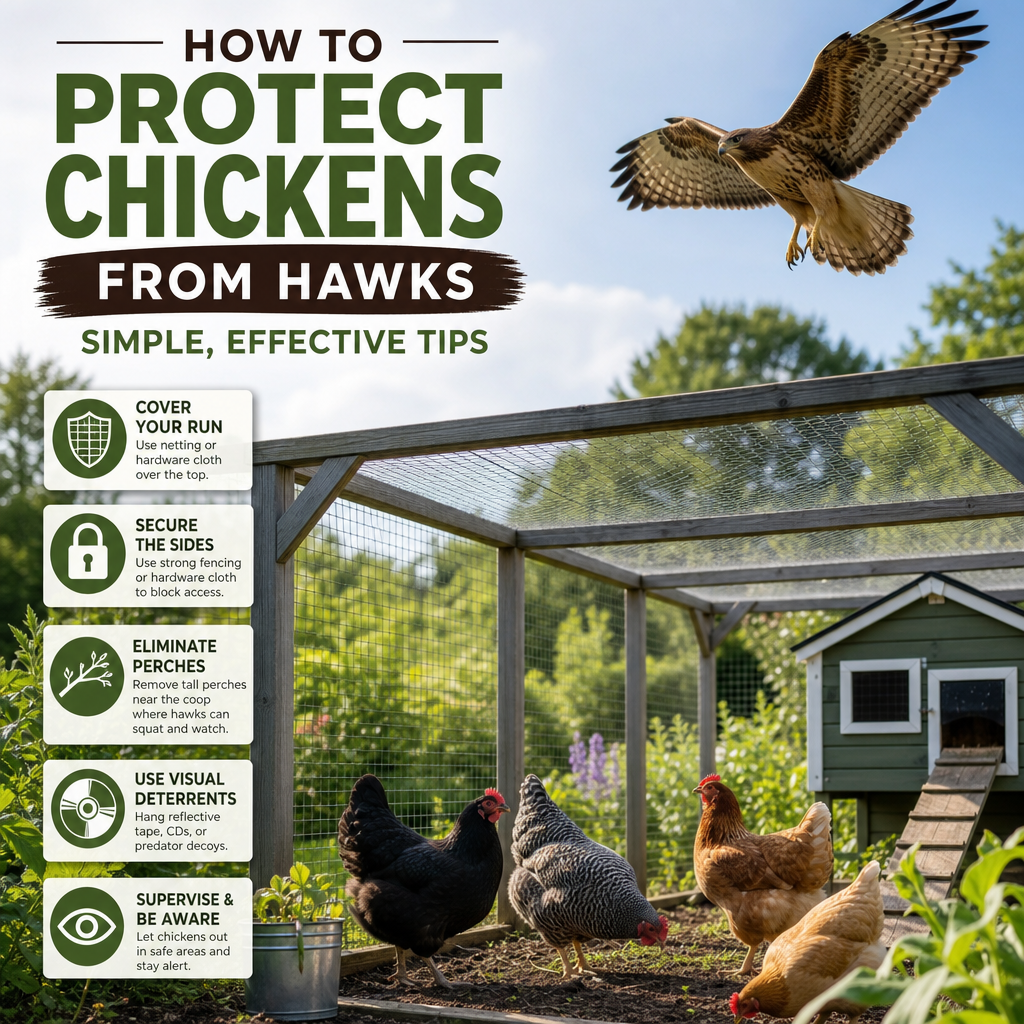
1. Cover the run with netting or wire
The most reliable way to stop hawk attacks is to block aerial access.
Good options include:
- Heavy-duty aviary netting
- Poultry wire over enclosed runs
- Hardware cloth for smaller, permanent structures
- Tarp panels or solid roofing over part of the run
A covered run gives chickens a safe place to spend time outside without being exposed from above. If your flock spends most of the day in a run, overhead protection should be your first priority.
2. Provide plenty of overhead shelter
If chickens free-range, they need places to hide fast. Hawks hesitate when prey can disappear quickly.
Useful shelter includes:
- Trees and shrubs
- Low brush piles
- Chicken tractors
- Covered patios or lean-tos
- Pallets set up as shade shelters
- A-frame hideouts in the yard
Try to avoid large, open areas where chickens are fully visible from the sky. Even temporary cover can make a major difference.
3. Keep chickens in a secure run during high-risk times
Hawks often hunt in daylight, especially morning and late afternoon. If attacks are happening regularly, limit free-ranging during those hours.
Chickens are safer when:
- Let out only when someone is nearby
- Ranged for shorter periods
- Kept in covered runs when hawks are active
- Brought in early if hawks are circling
This simple schedule change can greatly reduce losses.
4. Use a rooster or flock guardian
A good rooster often alerts hens to danger and may help them seek cover quickly. While a rooster cannot physically stop every hawk, he can improve flock awareness.
Some keepers also use guardian animals such as:
- Livestock guardian dogs
- Protective farm dogs
- Geese in some mixed setups
Guardian animals work best as part of a larger protection plan, not as the only defense.
5. Remove things that attract hawks
Hawks are drawn to places with easy prey. If your property attracts rodents or wild birds, it may become more interesting to predators.
To reduce attraction:
- Store feed in sealed containers
- Clean up spilled grain
- Avoid feeding wild birds near the chicken area
- Control rodents around coops and sheds
- Keep chicks out of sight from open areas
A cleaner setup is less likely to encourage predator activity.
How to protect free-range chickens from hawks
Free-ranging gives chickens more space, but it also increases their exposure. If you want to free-range safely, focus on controlled access and visible cover.
Best practices include:
- Free-range only when you are home
- Rotate ranging areas so birds do not spend all day in exposed ground
- Keep them near bushes, fencing, and structures
- Avoid turning them out in wide open pasture unless there is shelter
- Train birds to return quickly when called or when treats are offered
If hawks are common in your area, fully open free-ranging may not be worth the risk.
How to protect chicks and small chickens
Chicks are the easiest targets for hawks. They should never be left in open spaces without overhead protection.
For chicks and bantams:
- Use covered brooders and covered outdoor pens
- Avoid wire tops with openings large enough for talons
- Keep them close to buildings or near human activity
- Add hiding boxes and shaded corners
- Do not leave them unattended in an open yard
If you raise young birds outdoors, secure top coverage is essential.
Do decoys and deterrents work?
Some people try scare tactics such as fake owls, reflective tape, streamers, or noise makers. These may help briefly, but hawks often get used to them.
Deterrents that may offer limited support:
- Reflective tape
- Hanging CDs or shiny objects
- Motion-activated sprinklers
- Predator eye balloons
- Fake owl decoys moved frequently
These are not substitutes for physical protection. Think of them as temporary backup, not a full solution.
Can hawks carry off a chicken?
Small hawks may kill a chicken they cannot carry, while larger hawks can sometimes lift very small birds. Chicks, pullets, and bantams are at greatest risk. Standard-sized adult hens are less likely to be carried off, but they can still be injured or killed.
If you find missing birds with scattered feathers, a hawk may be responsible, especially if the attack happened in daytime. However, other predators can leave similar signs, so look at the full pattern of losses.
Signs a hawk is targeting your flock
You may notice:
- Hawks perched on fences, trees, or nearby poles
- Chickens suddenly freezing or running for cover
- Alarm calls from a rooster or the hens themselves
- Feathers in the yard during daylight hours
- Repeated flyovers over the same ranging area
Once a hawk identifies your yard as a hunting spot, repeated visits are possible. Fast action matters.
What not to do
To protect chickens from hawks effectively, avoid these common mistakes:
- Letting chickens range in open areas without shelter
- Assuming adult hens are completely safe
- Relying only on scare devices
- Leaving chicks outside uncovered
- Ignoring daytime predator signs
- Trying to trap, harm, or kill hawks illegally
Hawks are protected in many regions, and harming them can lead to legal penalties. Prevention is the proper response.
A simple hawk protection setup for backyard chickens
If you want a practical and affordable plan, start with this:
- Build or upgrade a covered run
- Add shrubs, tarps, or small shelters in ranging areas
- Let chickens out only when someone is nearby
- Keep chicks and bantams fully enclosed from above
- Remove spilled feed and reduce rodent activity
- Watch for hawk patterns and adjust ranging times
This combination solves the problem for most backyard flocks.
Frequently asked questions
Will a hawk keep coming back after killing a chicken?
Yes. If a hawk finds easy prey, it may return. That is why immediate changes like confining the flock and adding overhead cover are important.
Are black chickens safer from hawks?
Some chicken keepers believe darker birds may be slightly less noticeable, but color alone will not protect a flock. Shelter and covered runs matter far more.
Does fishing line stop hawks?
Fishing line strung overhead can make aerial approach more difficult in some setups, but it is less reliable than proper netting or wire cover. It may help in small yards, but it should not be your only protection.
Will a rooster fight off a hawk?
A rooster may warn the flock and sometimes confront danger, but he cannot reliably stop a determined hawk. His main value is early warning.
Is it safe to let chickens free-range at all?
It can be, but only if the area has enough cover and you accept some level of risk. In hawk-heavy areas, supervised or limited free-ranging is much safer than all-day access.
Final answer
If you are wondering how to protect chickens from hawks, the most effective solution is to prevent access from above and give your flock instant places to hide. A covered run, overhead shelter, safer ranging times, and close protection for chicks will do more than any decoy or gadget. Hawks look for easy targets, so when your chickens are well covered and less exposed, attacks become much less likely.