
Bumblefoot in chickens is a common foot problem that can range from a mild irritation to a serious infection. If caught early, most cases can be treated successfully. If ignored, it can cause pain, lameness, swelling, and deeper tissue infection. Understanding the causes, treatment options, and prevention steps is the best way to protect your flock.
What is bumblefoot in chickens?
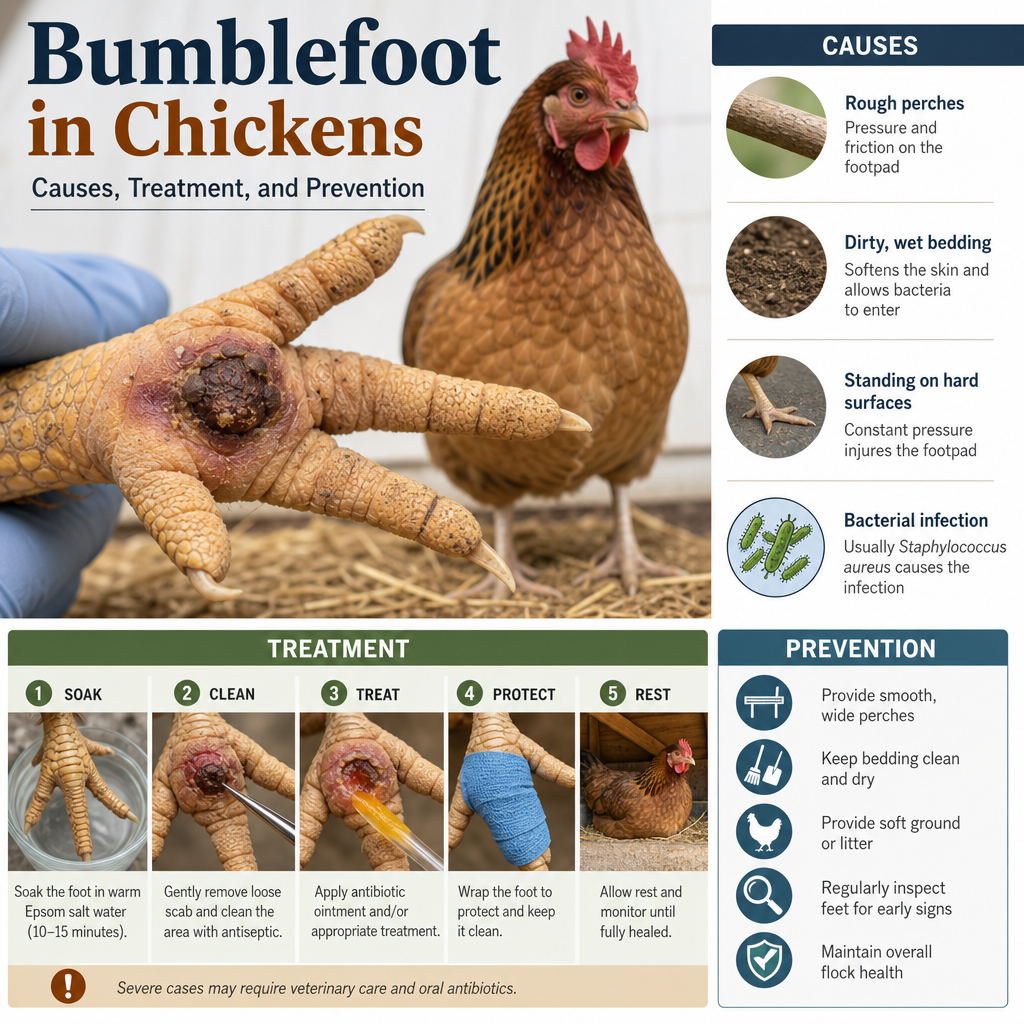
Bumblefoot is a bacterial infection and inflammatory condition of a chicken’s foot, usually affecting the foot pad but sometimes the toes or joints as well. It often starts when the skin is damaged by a cut, scrape, splinter, pressure sore, or puncture. Bacteria then enter the wound and trigger swelling, infection, and the formation of a hard scab or abscess.
The most common bacteria involved is Staphylococcus aureus, although other bacteria may also play a role.
In simple terms, bumblefoot is usually an infected sore on the bottom of a chicken’s foot.
Common signs of bumblefoot
The earlier you identify bumblefoot, the easier it is to treat. Watch for these symptoms:
- Limping or favoring one foot
- Reluctance to walk, perch, or scratch
- Swelling in the foot pad or toes
- Redness or warmth
- A dark scab or plug on the bottom of the foot
- A firm lump or abscess
- Pain when the foot is touched
- Reduced activity or appetite in severe cases
Some chickens hide discomfort well, so regular foot checks are important, especially if a bird starts moving differently.
What causes bumblefoot in chickens?
Bumblefoot in chickens usually develops when a foot injury combines with bacteria and poor environmental conditions. Several factors can contribute.
1. Foot injuries
Small wounds create an entry point for bacteria. These injuries may come from:
- Sharp rocks
- Splinters
- Wire flooring or damaged hardware cloth
- Thorny plants
- Rough roost surfaces
- Broken coop equipment
Even a tiny puncture can become infected.
2. Poor roost design
Roosts that are too narrow, too hard, too high, or have sharp edges can put excessive pressure on the foot pad. Repeated pressure can damage the skin and lead to sores.
Ideal roosts should allow the chicken’s foot to rest comfortably with even weight distribution.
3. Dirty or wet conditions
Wet, muddy, or manure-covered bedding softens the skin and increases bacterial exposure. Damp environments are one of the biggest risk factors for foot problems in backyard chickens.
4. Obesity and excess weight
Heavier birds place more pressure on their feet. This is especially common in larger breeds and meat birds, which are more prone to pressure-related foot injuries.
5. Jumping from high surfaces
Repeated jumping from high roosts or nesting box roofs can bruise the foot pad and create pressure damage over time.
6. Nutritional imbalances
Poor nutrition can affect skin health, healing, and immune function. While bumblefoot is usually linked to injury and infection, inadequate diet may increase risk and slow recovery.
Which chickens are most at risk?
Any chicken can get bumblefoot, but some birds are more likely to develop it:
- Heavy breeds
- Older chickens
- Overweight birds
- Chickens kept in wet or unsanitary runs
- Birds with limited exercise
- Chickens using high roosts
- Birds with previous foot injuries
Routine checks are especially important in flocks with these risk factors.
How serious is bumblefoot?
Mild bumblefoot may only involve superficial swelling and a small scab. Severe bumblefoot can spread into deeper tissues, tendons, joints, or bone. In advanced cases, it may lead to chronic pain, serious lameness, and systemic infection.
This is why prompt treatment matters. A small lesion can become much harder to manage if left untreated.
How to diagnose bumblefoot in chickens
In many backyard flocks, bumblefoot is recognized by its appearance and symptoms. A typical case involves:
- Swelling of the foot
- A central dark scab on the bottom
- Pain or limping
However, not every swollen foot is bumblefoot. Other possible causes include:
- Sprains or fractures
- Leg mites
- Arthritis
- Gout
- Joint infections
- Cuts or foreign objects without abscess formation
If the swelling is severe, if both feet are affected, or if the chicken is very lame or unwell, a veterinarian should evaluate the bird.
Bumblefoot treatment in chickens
The best treatment for bumblefoot in chickens depends on how advanced the infection is. Mild cases may improve with soaking, cleaning, topical care, bandaging, and pressure relief. Severe cases may require veterinary treatment, antibiotics, pain relief, or surgical removal of infected material.
Step 1: Isolate the chicken if needed
If the bird is being picked on, is having trouble moving, or needs regular bandage care, keeping it in a clean recovery space can help. Use dry, soft bedding and limit jumping or rough activity.
Step 2: Examine the foot
Gently inspect the foot for:
- A scab or black plug
- Swelling
- Heat
- Open wounds
- Embedded debris
- Signs of deeper infection
If the foot is extremely swollen, bleeding, foul-smelling, or if the infection appears to involve the leg or joints, contact a poultry vet.
Step 3: Soak and clean the foot
Soaking can soften the scab and help clean the area.
A common approach is to soak the foot in warm water with a poultry-safe antiseptic solution for 10 to 15 minutes. After soaking:
- Pat the foot dry with a clean towel
- Gently remove surface dirt
- Disinfect the area
Do not aggressively dig at the foot unless you know what you are doing. Improper cutting or squeezing can cause pain, bleeding, and worsening infection.
Step 4: Treat mild cases conservatively
If the lesion is small and the chicken is still walking fairly well, conservative care is often the safest first step. This may include:
- Daily soaking
- Cleaning with antiseptic
- Applying a suitable wound product
- Bandaging the foot to keep it clean and reduce pressure
- Keeping the bird on clean, dry bedding
Many mild cases improve over days to weeks with consistent care.
Step 5: Bandage the foot properly
Bandaging helps protect the wound, cushion the foot, and keep medication in place.
A basic bandage often includes:
- A clean non-stick pad over the sore
- Soft gauze or padding
- Vet wrap applied snugly but not tightly
The toes should not become cold, swollen, or discolored. Change the bandage regularly, especially if it gets wet or dirty.
Step 6: Know when abscess removal may be needed
More advanced bumblefoot often forms a hard core of infected material. In chickens, abscesses can become solid rather than fluid-filled. This is why some cases do not resolve with soaking alone.
Removal of the scab and infected core may be necessary in stubborn or severe cases, but this is best done by a veterinarian or someone experienced with poultry wound care. Incomplete removal or poor technique can delay healing and increase complications.
When to see a veterinarian
Veterinary care is the best option if:
- The chicken cannot walk normally
- The foot is severely swollen
- The infection keeps returning
- Home treatment is not improving the condition
- There is bleeding, pus, or a bad odor
- The bird seems weak, thin, or depressed
- You suspect infection in the joint or bone
A vet may prescribe antibiotics, pain relief, imaging, or perform a procedure to remove infected tissue safely.
Can you use antibiotics for bumblefoot?
Antibiotics may help in some cases, especially when infection is deep or spreading, but they are not always enough on their own. Because bumblefoot often contains a solid abscess core, medication may not penetrate effectively unless the infected material is also removed or the wound is opened and cleaned.
Antibiotics should ideally be used under veterinary guidance to ensure correct drug choice, dosage, and withdrawal considerations for eggs or meat if applicable.
How long does bumblefoot take to heal?
Healing time depends on severity.
- Mild cases may improve within 1 to 2 weeks
- Moderate cases may take several weeks
- Severe or chronic cases may require long-term care
Even after the infection improves, the foot may remain thickened or scarred for some time. Continue monitoring until the skin has healed and the bird is walking comfortably.
How to care for a chicken recovering from bumblefoot
Good aftercare helps prevent setbacks. During recovery:
- Keep bedding clean and dry
- Limit jumping from high roosts
- Change bandages as directed
- Check the foot daily
- Provide balanced nutrition
- Monitor appetite, droppings, and behavior
- Watch for renewed swelling or lameness
A recovering bird should gradually become more active and comfortable.
How to prevent bumblefoot in chickens
Prevention is easier than treatment. Most cases can be avoided by improving coop design, hygiene, and routine flock care.
Keep the coop and run clean and dry
Moisture and manure increase bacterial load and soften the foot pad. To reduce risk:
- Replace wet bedding promptly
- Improve drainage in muddy runs
- Clean roosts regularly
- Use absorbent litter
- Provide dry resting areas
Use safe roosts
Roosts should support the foot well and reduce pressure points.
Good roost features include:
- Smooth, splinter-free surfaces
- Appropriate width for the breed
- Rounded or slightly flattened edges
- Stable construction
- Reasonable height
Avoid roosts made from thin, sharp-edged boards or narrow poles that concentrate weight on one part of the foot.
Reduce jumping injuries
If roosts are very high, add ramps or lower perches. This is especially helpful for heavy breeds and older hens.
Remove hazards
Inspect the coop and run regularly for:
- Sharp wire ends
- Broken boards
- Nails or screws
- Thorny debris
- Jagged plastic or metal
Foot injuries often start with environmental hazards that are easy to fix.
Manage weight and nutrition
Help chickens maintain a healthy body condition with:
- Balanced commercial feed
- Appropriate treats in moderation
- Access to exercise and foraging
- Clean water at all times
Healthy skin and body weight reduce pressure on the feet and support healing.
Check feet regularly
Routine foot inspections are one of the best prevention tools. Look for:
- Cuts
- Scabs
- Swelling
- Red spots
- Cracks
- Limping
Early detection can stop a minor problem from becoming a major infection.
Frequently asked questions about bumblefoot in chickens
Is bumblefoot contagious?
Bumblefoot itself is not usually considered contagious in the way respiratory diseases are. However, multiple chickens may develop it if they share the same poor conditions, unsafe roosts, or wet environment.
Can bumblefoot heal on its own?
Very mild cases may improve if pressure is relieved and the environment is kept clean and dry, but many cases worsen without treatment. It is best to intervene early.
What does bumblefoot look like?
It often appears as a swollen foot pad with a dark scab or plug on the bottom. The foot may feel warm, firm, and painful.
Can a chicken walk with bumblefoot?
Yes, especially in the early stages, but walking may be uncomfortable. As the infection worsens, the chicken may limp, rest more, or stop using the foot normally.
Should you remove the black scab?
Not always. In mild cases, conservative treatment may be enough. In deeper cases, removing the scab and infected core may be necessary, but doing this incorrectly can worsen the injury. If unsure, seek veterinary help.
Is Epsom salt good for bumblefoot?
Warm soaks are commonly used to soften the tissue and clean the foot, and some keepers use Epsom salt. However, soaking alone does not cure deeper infection. It is only one part of treatment.
Can bumblefoot cause death?
In most backyard cases, bumblefoot is treatable and not fatal when addressed promptly. But severe neglected infections can spread and become serious, especially in weak or immunocompromised birds.
Final thoughts
Bumblefoot in chickens is a treatable condition, but success depends on early action. Most cases begin with a small foot injury, then worsen due to pressure, bacteria, and damp or dirty conditions. If you notice limping, swelling, or a scab on the foot pad, inspect the bird right away.
For mild cases, cleaning, bandaging, and improving the environment may be enough. For severe or persistent cases, veterinary care is the safest and most effective choice. Long-term prevention comes down to clean housing, safe roosts, regular foot checks, and prompt attention to any injury.
A little prevention and early care can spare your chickens significant pain and help keep your flock healthy and active.