It’s a question that comes from a good place. You want chickens, you have a modest backyard, and somewhere in the back of your mind is the nagging thought: is this actually fair to the birds? Are you setting up a situation where animals suffer for your hobby?
The fact that you’re asking at all says something positive about your approach to keeping animals. And the honest answer — which this article gives you in full — is more nuanced than either a simple yes or a simple no.
Keeping chickens in a small backyard is not inherently cruel. But it can become cruel depending on how it’s done. The difference between a small backyard flock that thrives and one that suffers comes down to a handful of specific, manageable factors — and understanding those factors is what this article is about.
What Does “Cruel” Actually Mean for a Chicken?
Before answering whether small backyard keeping is cruel, it’s worth being clear about what cruelty means in the context of animal welfare — because it’s not just about space.
Animal welfare science generally evaluates wellbeing across five domains: nutrition (adequate food and water), physical health (freedom from injury and disease), behavioral expression (ability to perform natural behaviors), mental state (freedom from prolonged fear, frustration, or distress), and social conditions (appropriate social interaction with other animals).
Cruelty — whether intentional or through neglect — occurs when one or more of these domains is chronically compromised. A chicken with inadequate space but excellent nutrition, good health care, appropriate social companions, and opportunities for natural behavior is in a better welfare state than a chicken with unlimited space but poor nutrition, no veterinary care, and chronic social stress.
Space matters. But it’s one factor among several, not the only one that counts.
What Chickens Actually Need: The Honest List
To assess whether a small backyard setup is adequate, you first need to understand what chickens genuinely require — not what’s ideal in a perfect world, but what’s necessary for genuine wellbeing.
Social companionship. Chickens are flock animals. A single chicken kept alone is a chicken under chronic stress, regardless of how much space it has. The minimum for genuine chicken wellbeing is two birds, and three or more is better. This is non-negotiable — social isolation is one of the clearest welfare failures in backyard chicken keeping, and it happens more often than it should when a keeper starts with one bird “to see how it goes.”
Adequate space to move, forage, and express natural behaviors. Chickens need enough space to walk around, scratch at the ground, flap their wings, and move away from other birds when social tension arises. The commonly cited minimum is 4 square feet of indoor coop space per bird and 10 square feet of outdoor run space per bird. These are floors, not targets — more is always better — but well-managed flocks at these minimums can thrive.
A safe, dry, well-ventilated shelter. Chickens need protection from predators, rain, wind, and extreme temperatures. A coop that’s too small, poorly ventilated, or inadequately protected causes stress and health problems regardless of outdoor space.
Access to the ground. Chickens evolved as ground-dwelling foragers. Access to real soil — for scratching, pecking, and dust bathing — is important for both physical health and behavioral wellbeing. A completely concrete or solid-floored run with no access to soil is significantly less adequate than one with natural ground, even if the space dimensions are the same.
Appropriate nutrition. Layer feed, fresh water, and calcium supplementation. This is straightforward and not space-dependent.
Basic health care. Parasite management, injury treatment, and access to veterinary care when needed. Also not space-dependent.
Predictable routine and a calm environment. Chickens are creatures of habit and stress easily when their environment is unpredictable, noisy, or frequently disrupted.
Notice that several of these requirements have nothing to do with total backyard size. A small backyard can meet all of them. A large backyard can fail several of them. Size is one variable, not the defining one.
The Space Question: What Does “Small” Actually Mean?
“Small backyard” means different things to different people. A 200-square-foot urban patio is small. A 2,000-square-foot suburban yard feels small to someone used to rural acreage but is genuinely spacious for a modest flock.
The relevant question isn’t how big your total backyard is — it’s how much dedicated space your chickens have access to, and whether that space meets their actual needs.
For a small flock of three to four hens, the minimum adequate outdoor space is 30 to 40 square feet of run area — roughly a 5 by 7-foot or 6 by 6-foot footprint. That’s genuinely small. Most suburban backyards, even modest ones, can accommodate this without significantly impacting the human use of the space.
Whether that minimum space is adequate in practice depends on management. Three hens in a 40-square-foot run with enrichment, regular cleaning, good nutrition, and daily keeper interaction are better off than three hens in a 400-square-foot run that’s never cleaned, never enriched, and never attended to. The management quality matters at least as much as the raw square footage.
The Case That Small Backyard Keeping Is NOT Cruel
There are strong and honest arguments that a well-managed small backyard flock is not only not cruel — it represents significantly better welfare than most of the alternatives.
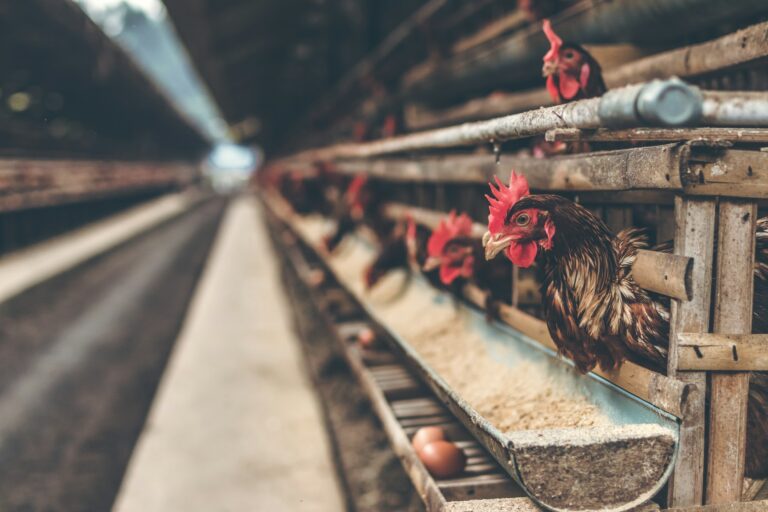
Commercial egg production is vastly worse. The eggs most people buy at the supermarket come from hens in conditions that make any reasonable backyard setup look like paradise. Even cage-free commercial systems house birds at densities and in conditions that severely restrict natural behavior. A backyard hen in a small but well-managed setup has better social conditions, more behavioral freedom, better nutrition, more human attention, and incomparably better health care than a commercial laying hen. If your reference point for chicken welfare is the commercial egg industry, almost any backyard setup compares favorably.
Chickens don’t need unlimited space — they need adequate space. Wild jungle fowl (the ancestors of domestic chickens) have home ranges that vary significantly by habitat and resource availability. They’re not wide-ranging animals that cover miles of territory daily. Research on free-ranging domestic chickens shows that given open access to unlimited space, most hens spend the majority of their time within a relatively small area around the coop — typically within 50 to 100 meters. Unlimited space doesn’t automatically produce better welfare outcomes than well-managed limited space.
Backyard hens typically have excellent social conditions. A small flock of compatible hens with a stable pecking order and adequate resources is socially comfortable. The chronic social stress that occurs in commercial systems — from extreme overcrowding, inability to escape dominant birds, and disrupted flock dynamics — is avoidable in a well-managed backyard flock regardless of size.
Backyard keepers provide individual attention and health care. A backyard keeper who knows each of their three hens by name notices when something is wrong quickly. Commercial hens receive essentially no individual health care. The individual attention that backyard keeping provides is a genuine welfare advantage.
The Case That Small Backyard Keeping CAN Be Cruel
Honesty requires acknowledging the conditions under which small backyard keeping does cause genuine welfare problems.
Overcrowding is the most common failure. The single most reliable path to a miserable backyard flock is too many birds in too little space. Overcrowding causes chronic stress, feather pecking, aggression, ammonia buildup from concentrated waste, soil destruction, and rapid disease spread. A 40-square-foot run that’s fine for three hens becomes inadequate and cruel with six. Many backyard keepers start with a manageable number and add birds without expanding the space — this is where welfare problems begin.
Inadequate coop ventilation causes suffering. A coop that’s too small, poorly ventilated, or allowed to accumulate ammonia causes respiratory damage and chronic discomfort regardless of outdoor space. Ammonia at levels that cause visible eye irritation in humans is causing active harm to birds breathing it continuously. This is entirely avoidable with proper coop management but is a genuine welfare failure when it occurs.
Boredom in bare, unstimulating environments. A small concrete run with nothing to do — no scratching substrate, no perches at different heights, no variation in the environment — produces bored chickens. Boredom in chickens leads directly to feather pecking, which escalates to cannibalism in severe cases. A small space that’s enriched and varied is better than a large space that’s bare and monotonous, but a small bare space is genuinely inadequate.
Isolation from the flock. As noted above, keeping a single chicken is a welfare failure. One bird alone, regardless of space, is a stressed bird. This is one of the clearest lines between adequate and cruel in backyard chicken keeping.
Neglect of health issues. Small backyard keeping is not passive — it requires daily attention and willingness to seek veterinary care when needed. A keeper who doesn’t notice mite infestations, respiratory infections, or injury because they’re not observing their birds regularly is allowing preventable suffering. The intimacy of small-flock keeping is only a welfare advantage if the keeper actually uses it.
Confinement without any outdoor access. Chickens kept permanently indoors with no access to natural light, real ground, or outdoor space are in a welfare-compromised situation. While chickens don’t need to free-range an acre of land, some access to natural conditions — sunlight, real soil, outdoor air — is meaningful to their wellbeing.
The Enrichment Answer: How Small Spaces Can Be Made Genuinely Good
If you have a small backyard and want to keep chickens well, enrichment is your most powerful tool. A small space that’s thoughtfully enriched can provide significantly better welfare than a large space that’s bare and unstimulating.
Scratching substrate. Deep loose substrate — wood chips, leaf litter, straw, or a mixture — gives chickens something to do. Scratch and peck behavior is deeply instinctive, and birds with good scratching material spend hours engaged in natural foraging behavior even in a small run. This single element makes more difference to behavioral welfare in a confined flock than almost anything else.
Perches at different heights. Vertical space is under-used by most backyard keepers. Adding perches, logs, or platforms at different heights multiplies the usable space in a run without expanding its footprint, and satisfies the natural roosting instinct that chickens express even during the day.
Dust bathing area. A dry, protected dust bathing spot — a container filled with dry soil, sand, and wood ash — allows one of the most important natural behaviors chickens perform. In a small run that gets wet, a covered dust bath area is particularly important.
Scatter feeding. Instead of filling a feeder and walking away, scatter a portion of feed (or treats like dried mealworms, scratch grains, or chopped greens) across the run floor. This turns a five-second feeding event into 30 minutes of active foraging behavior. The birds are doing what they’re designed to do, and a fed chicken that has foraged for its food is a more behaviorally fulfilled chicken than one that ate from a dish.
Rotation and variety. If your setup allows, dividing the run into two sections and rotating access lets vegetation recover and gives birds a fresh patch of ground periodically. Even if full rotation isn’t possible, periodically adding a fresh bag of leaves, a pile of compost, or a new log gives birds something novel to investigate.
Supervised free-range time. Even if you can’t give birds permanent free-range access — because of predators, garden concerns, or neighbor proximity — supervised free-range time in the broader backyard for an hour or two each day dramatically expands their behavioral world. This is one of the most practical and impactful things a small-space keeper can do for flock wellbeing.
How Many Chickens Is Right for Your Space?
This is the most practical question, and the one where most backyard keeping welfare failures begin.
A conservative but reasonable approach for a truly small urban or suburban backyard:
For a dedicated run of 30 to 40 square feet: two to three hens maximum, with daily supervised free-range time if possible.
For a dedicated run of 50 to 80 square feet: three to four hens comfortably, four to five with good enrichment and management.
For a run of 100 square feet or more: five to six hens is manageable with good husbandry.
These numbers assume the coop meets minimum indoor space requirements alongside the run. They also assume active management — regular cleaning, enrichment, health monitoring, and willingness to reduce flock size if welfare problems emerge.
The temptation to add “just one more” hen is one of the most consistent paths to welfare problems in backyard flocks. Resist it unless you’re expanding the space simultaneously.
The Honest Bottom Line
Keeping chickens in a small backyard is not inherently cruel. It becomes cruel — through specific, identifiable, and avoidable failures — when birds are overcrowded, under-stimulated, poorly managed, or neglected.
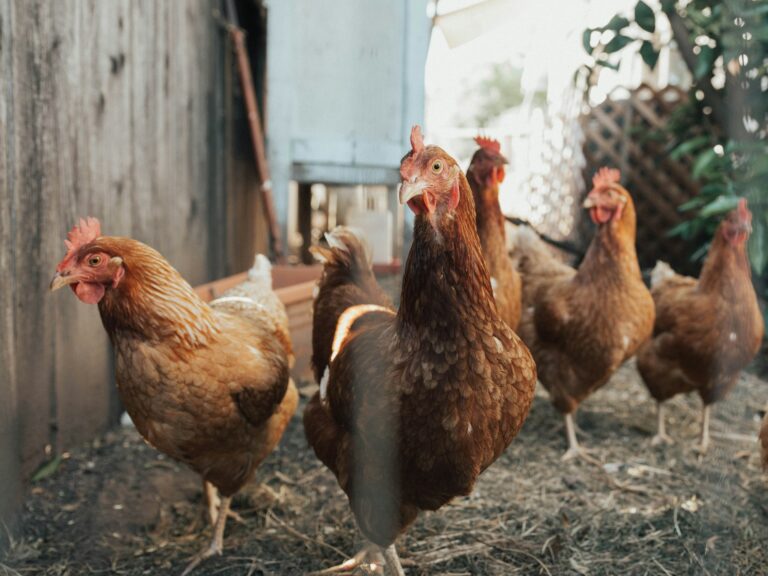
A small flock of two to four hens in a well-designed, enriched, clean, and actively managed setup can live genuinely good lives in a modest urban or suburban backyard. They’ll forage, dust bathe, establish a comfortable social order, produce eggs, and display all the behavioral signs of contentment that distinguish a thriving flock from a suffering one.
The question isn’t really whether your backyard is big enough. It’s whether you’re willing to manage it well enough. Space is a resource — management is what determines whether that resource translates into animal welfare or animal suffering.
If you’re asking the question in the first place, you’re already thinking about this the right way.