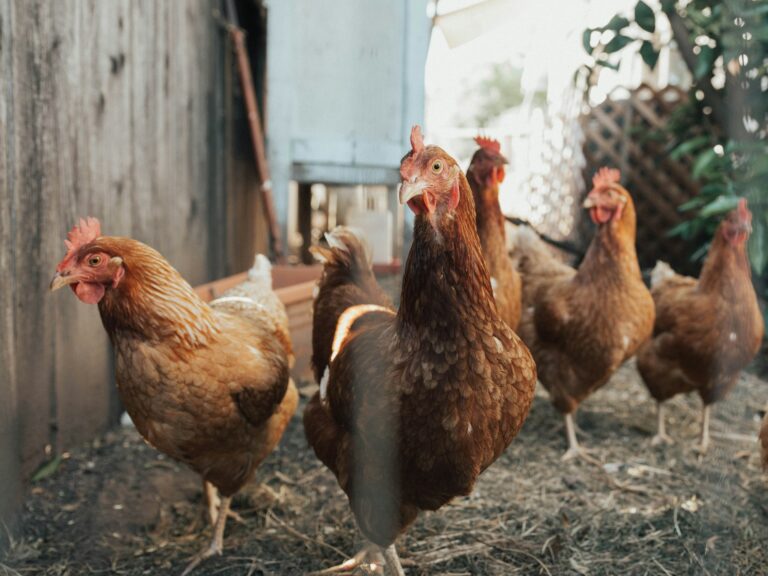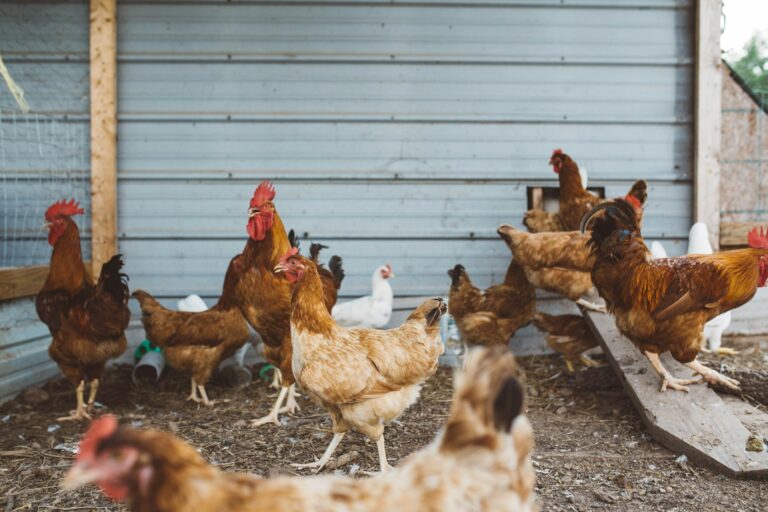
If you let your chickens free range in the yard during summer evenings, you’ve probably watched them snap at anything that moves — moths, beetles, grasshoppers, the occasional unlucky frog. Chickens are enthusiastic and indiscriminate foragers, and most of what they catch in a healthy backyard is perfectly fine for them to eat. Insects are a natural part of a chicken’s diet and a valuable source of protein.
But fireflies are a different story entirely. Those blinking lights drifting across your yard on a warm summer evening look harmless — magical, even — but they contain compounds that are genuinely toxic to chickens, and the consequences of ingestion can be fatal even in small quantities. This is one of the few backyard insect encounters where the answer is a clear and unambiguous no.
Here’s what you need to know.
Why Fireflies Are Toxic to Chickens
Fireflies — also called lightning bugs — produce their characteristic glow through a chemical reaction involving compounds called lucibufagins. These are defensive steroidal pyrones that fireflies evolved specifically to make themselves unpalatable and toxic to predators. The bioluminescence itself is essentially an advertisement: the light warns potential predators that this insect is not safe to eat.
Most vertebrate predators learn this lesson quickly. Birds in the wild that have encountered fireflies typically avoid them. Domestic chickens, however, have lost much of this instinctive caution through generations of selective breeding and managed environments. A backyard hen that spots a firefly flickering in the grass is likely to chase and eat it without hesitation — and unlike a wild bird that might have learned better, she has no experience to tell her otherwise.
Lucibufagins are toxic across a surprisingly wide range of animals. Research has documented firefly toxicity in lizards, amphibians, and birds. Even small quantities can cause serious distress. A single firefly ingested by a small lizard has been documented causing death in laboratory settings. While chickens are considerably larger, the toxicity is real and the risk scales with the number of fireflies consumed.
What Happens If a Chicken Eats a Firefly
The symptoms of firefly toxicity in chickens aren’t always immediate, and the severity depends on how many fireflies were consumed and the size of the bird. What’s documented and reported by backyard keepers and poultry veterinarians includes:
Lethargy and weakness. A chicken that has ingested fireflies may become visibly subdued, unwilling to move around normally, and unresponsive to stimulation that would usually interest her.
Loss of appetite. Affected birds often stop eating and drinking, which compounds the problem as the body needs resources to process and clear the toxins.
Labored breathing. Respiratory distress is reported in some cases — a bird that appears to be breathing more heavily or with visible effort after a firefly encounter warrants immediate attention.
Neurological symptoms. In more serious cases, disorientation, loss of coordination, and inability to stand normally have been reported. These are signs of significant systemic toxicity.
Death. In cases involving multiple fireflies — particularly in smaller or already-stressed birds — fatalities have been reported. This is not a theoretical worst case; it is a documented outcome.
The speed of symptom onset varies. Some birds show signs within an hour of ingestion; others may appear fine initially and decline over several hours. If you witness a chicken eating a firefly or suspect ingestion, don’t wait for symptoms to appear before acting.
What to Do If Your Chicken Eats a Firefly
First, don’t panic — a single firefly ingested by a healthy, full-sized hen is not necessarily fatal. But it warrants prompt attention and close monitoring.
Isolate the bird. Move her to a quiet, comfortable space away from the rest of the flock where you can observe her closely without the stress of flock dynamics. Stress compounds the impact of toxins.
Encourage hydration. If the bird is still alert and able to drink, make fresh clean water easily accessible. Hydration supports the body’s ability to process and clear toxins. Some keepers add a small amount of electrolyte powder to the water to support recovery.
Contact a poultry vet. This is the most important step. Call a vet who has experience with poultry and describe exactly what happened — which insect, approximately how many, how long ago, and what symptoms you’re seeing. They can advise on whether supportive treatment is warranted and what to watch for.
Monitor closely for 24 hours. Even if the bird seems fine initially, check on her every few hours through the day and evening. Symptom onset can be delayed, and catching deterioration early gives you more options.
Do not induce vomiting. Chickens cannot vomit — they lack the physiological mechanism. Don’t attempt any home remedy that involves trying to get the bird to expel the ingested material. It won’t work and may cause additional stress or harm.
If you see rapid deterioration — severe lethargy, inability to stand, labored breathing, or loss of consciousness — treat it as an emergency and contact a vet immediately.
How Many Fireflies Are Dangerous?
This is a question without a precise answer, because the toxicity depends on several variables: the species of firefly (lucibufagin concentration varies between species), the size and health of the individual bird, and whether the firefly was fully consumed or just pecked at and dropped.
What is clear is that the risk is not purely theoretical and shouldn’t be dismissed as unlikely. Free-ranging chickens on summer evenings can encounter dozens of fireflies in a short period. A bird that catches and eats several in quick succession faces a meaningfully higher risk than one that snapped at a single firefly and then moved on.
The conservative and correct approach is to treat any firefly ingestion as a potential problem worth monitoring, and to take steps to prevent it from happening in the first place.
Other Insects That Are Toxic to Chickens
Fireflies aren’t the only insect your flock should avoid. While chickens can safely eat the vast majority of insects they encounter, a few others carry real risks.
Blister beetles contain cantharidin, a toxic compound that causes severe irritation and damage to the digestive tract. They’re most commonly found in alfalfa hay but can be present in gardens and fields. Ingestion of even a small number can be fatal to chickens.
Boxelder bugs are not highly toxic but have been associated with digestive upset in chickens that consume large numbers of them. Most chickens avoid them instinctively due to their unpleasant taste, but not all do.
Monarch butterflies contain cardiac glycosides absorbed from milkweed during the caterpillar stage. Like firefly lucibufagins, these are defensive compounds that make the butterfly toxic to predators. Chickens should not eat monarch butterflies or caterpillars.
Asian lady beetles (often confused with native ladybugs) secrete a defensive chemical that can cause mouth irritation and digestive upset. True native ladybugs are generally considered safe in small numbers, but Asian lady beetles are best avoided.
The general principle: brightly colored insects — red, orange, yellow, with bold patterns — are often signaling toxicity through their coloration. Aposematism (warning coloration) is widespread in the insect world. Fireflies with their bioluminescence, monarchs with their orange and black wings, blister beetles with their distinctive markings — the bold appearance is the warning. This isn’t a foolproof rule, but it’s a useful heuristic when observing your flock’s foraging behavior.
How to Protect Your Flock from Fireflies
Complete prevention is difficult if your chickens free range, but a few practical measures significantly reduce the risk.
Bring birds in before dusk. Fireflies are most active at dusk and in the early evening hours — exactly when chickens are having their last forage before roosting. Closing the coop and securing birds inside before peak firefly activity removes the exposure window almost entirely. This is the single most effective preventive measure.
Limit evening free ranging during firefly season. In most of the US, firefly season runs roughly from late May through July, with peak activity varying by region. During these weeks, consider keeping birds confined to their run in the evening hours rather than allowing open yard access at dusk.
Keep grass mowed. Fireflies tend to congregate in longer grass and vegetation. A well-mowed yard has fewer fireflies at ground level where foraging chickens can easily catch them.
Be observant during summer evenings. If you’re outside with your flock near dusk and notice fireflies in the yard, herd your birds back toward the coop. You don’t need to be alarmist about it — just aware.
Frequently Asked Questions
Can chickens eat dead fireflies?
Dead fireflies still contain lucibufagins. The toxicity doesn’t disappear when the insect dies. Avoid allowing chickens access to dead fireflies just as you would live ones.
Are all firefly species equally toxic?
No — lucibufagin concentrations vary between species, and not all firefly species produce lucibufagins at the same levels. However, since most backyard keepers can’t identify firefly species on the wing in the evening, treating all fireflies as potentially toxic is the sensible approach.
My chicken ate a firefly and seems completely fine — should I still be worried?
Monitor her closely for 24 hours regardless. A bird that appears unaffected after eating one firefly has likely processed a small enough dose without serious consequence, but delayed symptoms are possible. Keep a close eye on her behavior, appetite, and droppings through the following day.
Do fireflies taste bad to chickens?
Lucibufagins are bitter and unpalatable to many animals, which is the evolutionary point. Some chickens may spit a firefly out after initially catching it. However, domestic chickens don’t reliably self-regulate around novel toxic foods the way wild birds often do — don’t assume your birds will avoid fireflies on their own.
The Bottom Line
Chickens should not eat fireflies. The lucibufagins fireflies contain are genuinely toxic, capable of causing serious illness and death even in small quantities, and domestic chickens lack the instinct to avoid them reliably. The risk is real, well-documented, and entirely preventable.
The fix is simple: bring your birds in before dusk during firefly season. It costs you nothing, adds less than five minutes to your evening routine, and removes the risk almost entirely. Your hens will find plenty of safe, protein-rich insects to snack on during daylight hours — the fireflies can keep their lights on without becoming anyone’s dinner.